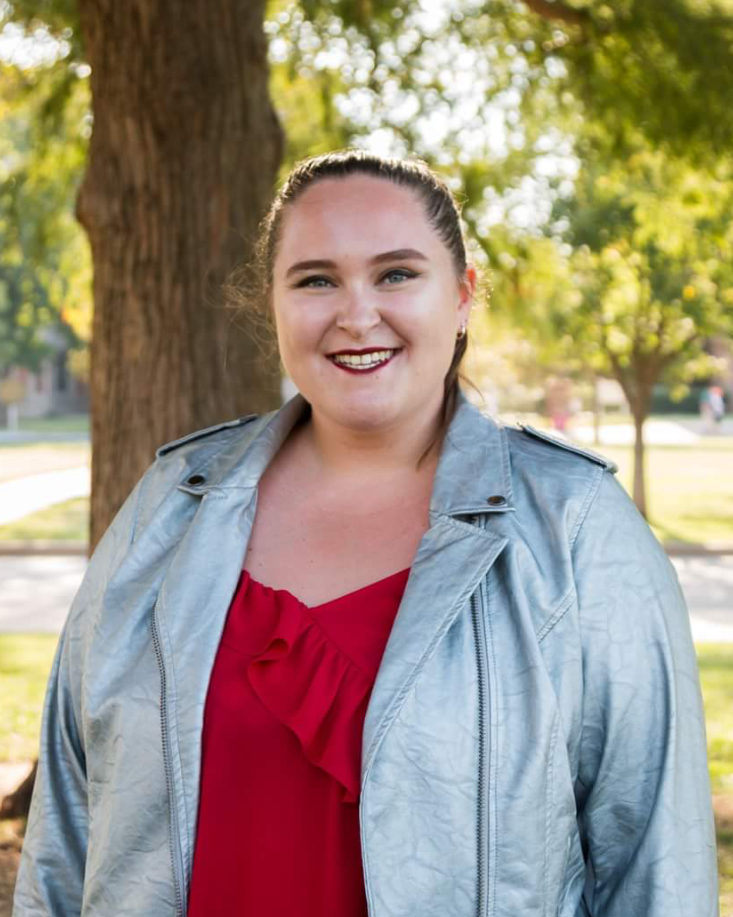
My GRFP Experience
I graduated from undergrad in May 2020. I would have been eligble to apply as an undergrad in Fall 2019. I didn't apply then, mostly because I had just finished applying to, and being rejected from, both the Rhodes and the Marshall scholarships. I was a very high-strung undergrad and I took the rejections REALLY hard, and I just didn't have the bandwidth to apply to GRFP that year. While I didn't apply to GRFP as an undergrad, I spent a LOT of time (and had a LOT of excellent mentorship) on learning how to write fellowship applications.
That experience, as well as applying to 12 PhD programs in Fall 2019, meant I was VERY experienced with application writing by the time I started my GRFP application in August 2020, during my first semester of grad school. I breezed through the personal statement, but I really struggled with the research statement. I had a general research problem and a strong broader impacts motivation, but it was pretty far from what did in undergrad, and I didn't really know enough about existing methods to propose an intelligent 3-year plan. I wrote a research statement that was good, but probably not strong enough to win, and a personal statment that was excellent. I submitted my application, but ended up withdrawing it due to a late rec letter.
At the time, you were allowed to apply once in EITHER your first OR second year of grad school. Because I had withdrawn my application, I was eligible to apply again as a second year. I applied again in Fall 2021, with mostly the same personal statement, a substantially improved research plan, and some improvements to my letters of rec. I had a more detailed letter from my PhD advisor because he had known me for more than a few months, and replaced a weaker undergrad letter with a letter from the PI of a grant I was on. I won the award in April 2022 and finished my tenure as a fellow in May 2025.
Katy's GRFP Advice
Important Caveats: I applied for GRFP several years ago (submitted my application in Fall 2021 for the 2022 award year). Things have changed a bit since then in terms of eligibility rules and the NSF's funding priorities since then. Some of this advice may no longer be applicable, but I hope some of it helps!
General
- Unlike most grants, GRFP funds people, not projects. You're being judged on your potential as a researcher, not your specific proposal.
- GRFP offers a ton of flexibility - if you win, you can study anything you want within your major field of study. I wrote my research plan on low-resource machine translation but I spent my whole fellowship working on LLM fairness.
- Start early if you can - I started drafting in August for an October deadline.
- Undergrads and graduate students (now called level one and level two) are judged separately.
- You will be judged by faculty in your major field of study (e.g. computer science) but not necessarily by people in your research area (e.g. NLP). Your application (especially the research plan) needs to be understandable to people outside of your subdomain.
- Try to get feedback on your application early from a variety of people: friends, labmates, past winners, and your PI/advisor. It helps to give people an idea of what kind of feedback you want (technical soundness? clarity of the story? proofreading?) to get the most useful input.
- Stay off Reddit/GradCafe/wherever else people are humble-bragging and comparing themselves to each other. People are doing it to make themselves feel better, and reading it will probably make you feel worse.
- While you're waiting for results in late March and early April, try not to obsess over when they will come out. People on GradCafe will try to predict it down to the minute based on past patterns, moon phases, tea leaves, etc. I drove myself crazy following these threads for no good reason - don't do this to yourself.
- Both of your statements need clear, bolded headings for both of the judging criteria: Intellectual Merit and Broader Impacts. I think these headings are a requirement now, but they were an unofficial convention back when I applied.
- Your personal statement is about the past (mostly, except for a small goals section); your research plan is about the future.
- Use your research plan to tell them WHAT you want to do, and your personal statement to tell them WHY you're the right person to do it.
- Your personal statement is 3 pages to cover your personal background, past research experiences, past professional development, and professional goals. My format was roughly: 2 paragraph intro and overview, 1.5 pages on your research background/intellectual merit, .75 pages on leadership/outreach/broader impacts, and a short summary of my long-term goals at the end.
- It's up to you how personal you want your personal statement to be. If you have a deep personal connection to your work (e.g. researching a disease to which you lost a family member) or challenges in your personal background that have shaped you as a researcher, those are totally valid to include! But if you don't have those things in your background or don't feel comfortable sharing them, it's totally ok to keep the content focused on research experience and academic background.
- When you talk about your prior research experience in the personal statement, try to focus on skills you learned from each experience. You should mention output (publications, etc.), but the most important thing is to establish how these experiences have prepared you to execute your proposed research plan.
- The research plan is not a funding application - its job is to show that you can understand literature, identify gaps, appropriately scope projects, and propose novel ideas. The goal is to show that you can think like an independent, graduate-level researcher. You are not obligated to do exactly what you said in the plan!
- Your research plan should include info about why your plan is feasible at your specific university - compute, equipment, advisors, collaborators, any relevant centers or institutes, etc. If you're applying as an undergrad, write it as though you've already been accepted to your first choice grad school.
- Your research plan can, and SHOULD, include citations. References count against the page limit, though, so compress and abbreviate as much as possible.
- Research plans are allowed to include figures, but whether they should is field-dependent. Is the figure more valuable than the additional text you could fit without it?
- Full justify instead of left-aligning your text to fit a few more lines of text on each page (but you should probably verify this is still allowed).
- The first time someone writes a rec letter for you is labor-intensive. If they've already written you a letter, it's much easier to update it and/or upload it multiple places. Once someone has written you a letter, don't be afraid to ask them to send it to another opportunity!
- Ask your recommenders early! For new letter writers, two or three months is reasonable. If they've already written your letter and it doesn't need updates, 3-4 weeks is probably okay.
- Recommenders should be people who have supervised you in research or research-adjacent projects and can speak to your capability for independent and innovative technical work. Most of the time these people will be PhDs, but one letter from a non-PhD mentor from an internship or similar is totally fine.
- Try to avoid recommenders who don't know you outside of classes. Unless the class had a substantial research project component, the standard "did well in class" letter is not a good use of your limited application space.
- Your letters should complement each other, not repeat the same info. Think about which of your strengths each recommender can best support, and then share those ideas with them!
- When you ask someone to write a letter, you should provide them: your CV, rough drafts of your statements, some idea of what you would like them to highlight about you, and a summary of your achievements while working with them.
- In general, it helps to think of your rec letters as pieces of your application, rather than outside things you have no control over. Choose recommenders and steer their directions to show off your best qualities and shore up any weaker parts of your application.
- Once someone has agreed to write a letter, and especially once they've written it, they WANT to get the letter in and they WANT you to succeed. Remind them of the deadline as much as necessary: polite reminders two weeks and one week before, then the day before the letter deadline, and then multiple times day of if needed.
- Be SO CAREFUL with due times and timezones. I had to withdraw my first application because of a letter that was less than an hour late. Due times used to be dependent on YOUR timezone, which may or may not be the recommender's timezone and may or may not be EST. I think this has gotten better, but to be safe, I would ask your recommenders to submit it by midnight the day before the actual due time.
- Send thank yous: after your application is submitted and you've caught up on sleep, let your recommenders know you got it in and thank them for their time and support. I was raised in the South so I tend to send handwritten thank-you cards on girly stationery. This is probably overkill. Handwritten is nice, but a kind email is probably also fine. Try to get thank-yous out within a week of submitting your app.
- Send updates: when you get your application decision in late March or early April, update your recommenders. It's polite to let them know the result either way. If you get a GRFP or Honorable Mention, they want to celebrate with you! They may also want to note on their own CVs that they have mentored NSF Fellows, so it's especially important to let them know a positive result.
GRFP Resources
Alex Lang's website is the GOAT of GRFP resources. He maintains a huge database of winning applications in all fields and a great advice page. There are also links to other great advice pages. Start here.
Here are my research plan and personal statement. Note that the formatting and rules have changed a bit in the past 5 years. My personal statement contains significant content about my involvement in STEM diversity efforts, and I don't know if it would do as well under today's program standards.
Your school's Nationally Competitive Fellowships office! At Oklahoma, it's in the Honors College and is run by my mentor Brian Johnson, without whom I couldn't have written the GRFP application I did. At USC, it's in the Graduate School, and they run an excellent External Fellowship Boot Camp which both helped with my GRFP application and has given me the opportunity to mentor numerous younger GRFP applicants. Find this office at your school, get to know the person who runs it, and take advantage of their experience with programs like GRFP.
Should you use AI to help with your GRFP application? I don't know - I wrote mine on stone tablets while riding a dinosaur to school, so I don't have any experience. In general, my advice is that AI can help with organizing ideas and editing, but the draft needs to come from you. Everyone who is applying has good grades and a <insert your favorite consumer AI product> subscription. Your voice and perspective are what make you a unique researcher and a compelling candidate.
What if I Don't Get It?
I am much more experienced at being rejected from competitive fellowships than I am at winning them. I've been rejected from the Goldwater, the Rhodes, the Marshall, the Hertz Foundation, the Ford Foundation, the Point Foundation, the program now called GEM Fellowships, and many others. Given the exceptional depth and breadth of my expertise in being rejected, I have three pieces of advice:- Submitting an application is an achievement in itself. Having enough knowledge to write a research plan and three recommenders to support you means you're doing a lot right. It also means you're well prepared to succeed in grad school, regardless of how you're funded.
- Fellowship writing is a skill, and you can build it. I probably wouldn't have won GRFP if I hadn't spent several months building this skill and being coached on it during my unsuccessful Rhodes/Marshall applications. Regardless of the result, fellowship writing forces you do some introspection and think about the overall story of your academic career. This process pushes you to clarify your research agenda and makes writing future applications a lot easier.
- Lots of fellowship applications ask for pretty much the same written materials. Your NSF GRFP application materials are a great starting point for other government fellowships, private foundation fellowships, corporate fellowships, and PhD program applications if you're still applying to grad schools. And remember: your recommenders have already written you a letter, so it's trivial for them to upload the same letter to another portal.
Final Thoughts
Thanks so much for reading! I know this is long, but I hope it's helpful.
I love mentoring GRFP applicants, so please email me or schedule a meeting if you want to chat more! I am also happy to review some written statements. First come, first served; I can probably review about 5 sets of materials per year. I can only review research plans for computer science and closely related fields, but I am happy to review personal statements and offer general advice for all fields!
Good luck on your application and in graduate school!